
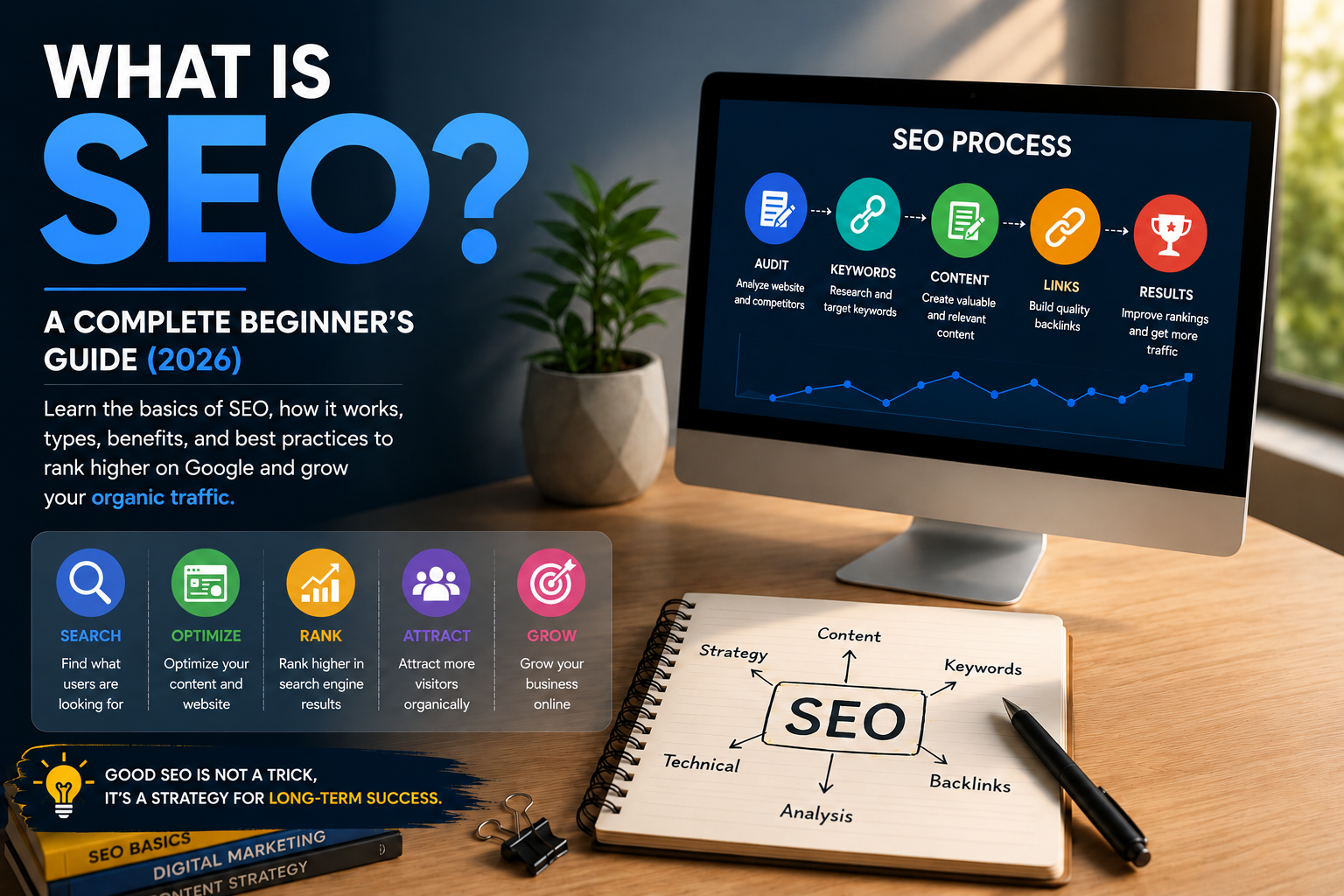
What Is SEO? A Complete Beginner’s Guide (2026)
If you’ve ever searched for a product, service, or answer on Google, you’ve already experienced the power of SEO. Businesses that appear at the top of search results don’t get there by chance. They use Search Engine Optimization (SEO) to improve their visibility and attract more visitors.
Whether you’re a business owner, marketer, student, or someone planning to build a website, understanding SEO is one of the most valuable digital skills you can learn. In this guide, we’ll explain what SEO is, how it works, why it’s important, and the key techniques you should know in 2026.
What Is SEO?
SEO, or Search Engine Optimization, is the process of improving a website so that it appears higher in search engine results for relevant keywords. The goal is to increase organic (non-paid) traffic from search engines like Google.
For example, if someone searches for “best website development company”, Google displays the most relevant and trustworthy pages. SEO helps your website become one of those results.
Unlike paid advertising, SEO focuses on earning visibility naturally by creating valuable content, improving website performance, and providing a better user experience.
How Does SEO Work?
Search engines like Google use automated programs called crawlers or bots to discover and analyze websites.
The basic process works like this:
- Crawling – Google discovers pages across the web.
- Indexing – Google stores those pages in its search index.
- Ranking – When someone performs a search, Google decides which pages best answer the query and displays them in order.
Ranking – When someone performs a search, Google decides which pages best answer the query and displays them in order.
- Content quality
- Keyword relevance
- Website speed
- Mobile friendliness
- User experience
- Backlinks from trusted websites
- Website security (HTTPS)
- Helpful and original information
The better your website performs in these areas, the greater your chances of ranking higher
Why Is SEO Important?
SEO offers long-term benefits for businesses and website owners.
Some of the biggest advantages include:
- Increases organic website traffic
- Builds trust and credibility
- Generates qualified leads
- Improves brand visibility
- Reduces dependence on paid advertising
- Delivers long-term marketing results
- Helps users find your products or services easily
Types of SEO
On-Page SEO
On-page SEO focuses on optimizing elements within your website.
- Writing high-quality content
- Using relevant keywords naturally
- Optimizing title tags and meta descriptions
- Using proper heading structure (H1, H2, H3)
- Adding descriptive image alt text
- Creating internal links
- Improving readability
Strong on-page SEO helps search engines understand your content while making it more useful for visitors.
Off-Page SEO
Off-page SEO involves activities outside your website that improve its authority and reputation.
- Earning quality backlinks
- Guest blogging
- Digital PR
- Brand mentions
- Social media promotion
Technical SEO
Technical SEO ensures that search engines can efficiently crawl, index, and understand your website.
- Fast loading speed
- Mobile responsiveness
- HTTPS security
- XML sitemap
- Robots.txt file
- Structured data (Schema Markup)
- Clean URL structure
- Fixing broken links
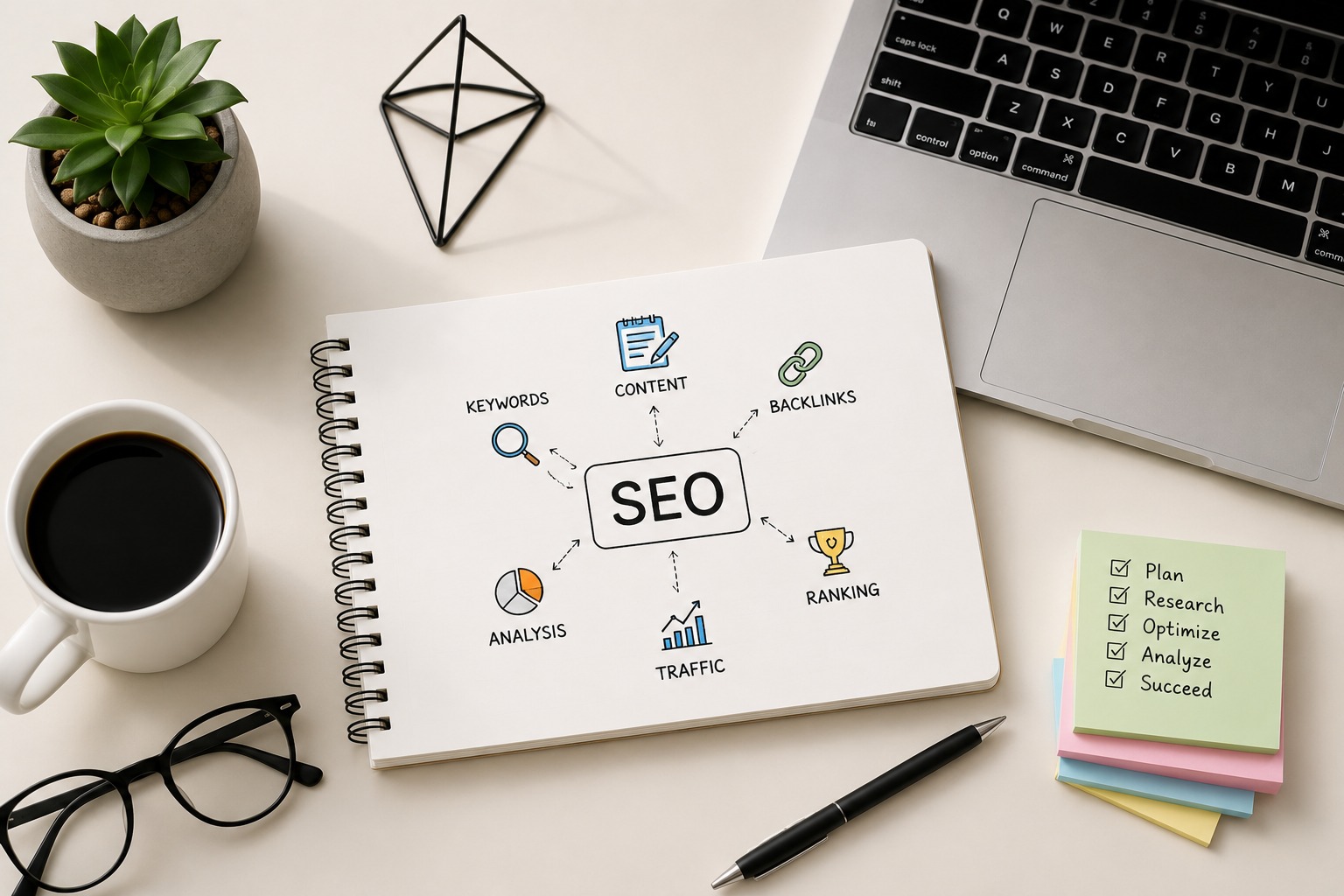
What Is Organic Traffic?
Organic traffic refers to visitors who find your website through unpaid search results.
For example, someone searches “What is SEO?” on Google, clicks your website, and reads your article. That visitor is considered organic traffic because you didn’t pay for the click.
Organic traffic is often more valuable because users are actively searching for information, products, or services.
What Are Keywords?
Keywords are the words and phrases people type into search engines.
- What is SEO
- SEO for beginners
- Website development company
- Digital marketing services
- Local SEO
How to Choose the Right Keywords
Keyword research helps identify the terms your target audience uses.
- Search volume
- Search intent
- Competition level
- Relevance to your business
Long-tail keywords often have lower competition and attract more targeted visitors.
For example:
Instead of targeting SEO, you could target What is SEO for small businesses or SEO guide for beginners.
Essential SEO Ranking Factors
Although Google uses many ranking signals, these factors have the greatest impact:
High-Quality Content
Create original, informative, and helpful content that answers user questions better than competing pages.
User Experience
Ensure your website is easy to navigate, visually appealing, and mobile-friendly.
Website Speed
Fast-loading websites improve user satisfaction and often perform better in search results.
Mobile Optimization
Most users browse on mobile devices. Responsive websites are essential for good SEO.
Backlinks
Links from reputable websites help build trust and authority.
Secure Website
Use HTTPS to protect user data and improve credibility.
Internal Linking
Connect related pages within your website to help users and search engines discover more content.
Common SEO Mistakes to Avoid
Many beginners unknowingly hurt their rankings by making avoidable mistakes.
- Keyword stuffing
- Publishing thin or duplicate content
- Ignoring technical SEO
- Slow website performance
- Poor mobile experience
- Missing meta titles and descriptions
- Not updating outdated content
- Buying low-quality backlinks
SEO Trends for 2026
SEO continues to evolve as search engines become smarter.
Some of the biggest trends include:
- AI-powered search experiences
- Helpful, experience-based content
- Strong emphasis on EEAT (Experience, Expertise, Authoritativeness, Trustworthiness)
- Faster websites and better Core Web Vitals
- Structured data implementation
- Voice search optimization
- Visual search improvements
- User-focused content rather than keyword-focused content
How Long Does SEO Take?
SEO is a long-term strategy.
While some improvements can be seen within a few weeks, meaningful growth often takes three to six months, depending on factors such as competition, website quality, and the consistency of your SEO efforts.
The advantage is that SEO provides sustainable results compared to paid advertising, where traffic usually stops once the budget ends.
Final Thoughts
SEO is one of the most effective ways to increase your online visibility and attract people who are actively searching for your products, services, or information.
By understanding how search engines work, creating valuable content, optimizing your website, and following SEO best practices, you can build a strong online presence that delivers long-term results.
Whether you’re starting your first website or looking to grow an established business, investing in SEO is one of the smartest decisions you can make in 2026.