
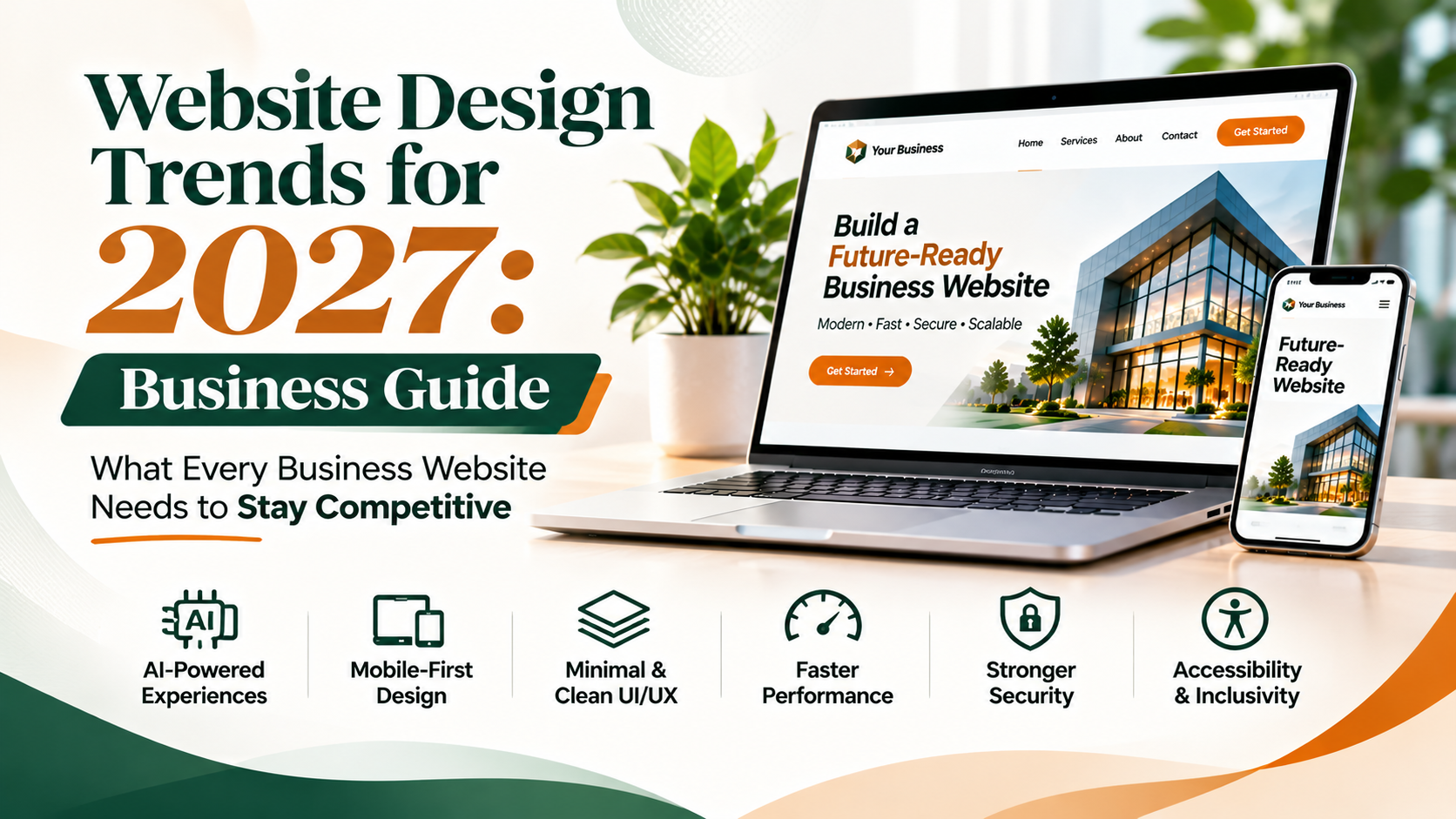
The way customers interact with business websites continues to evolve. As technology advances and user expectations change, businesses need websites that offer more than attractive layouts. Visitors expect fast-loading pages, simple navigation, mobile-friendly experiences, useful information, and convenient ways to connect with companies. A website that fails to meet these expectations may struggle to retain visitors and convert them into customers.
In 2027, website design will continue moving towards more personalised, accessible, performance-focused, and user-friendly digital experiences. Businesses are increasingly recognising that their websites are important parts of their marketing, customer communication, and sales processes. Whether you operate a small business, startup, professional service company, or e-commerce store, keeping your website updated can help you remain competitive in your industry.
For businesses in Hyderabad, investing in modern website design is particularly valuable as more customers compare products and services online before making purchasing decisions. A professionally designed website can help communicate credibility, showcase services, and create better opportunities for customer enquiries.
In this guide, we explore the important website design trends for 2027, how they can benefit businesses, and what companies should consider when planning a new website or redesigning an existing one.
Why Website Design Trends Matter for Businesses in 2027
Website design is not simply about following the latest visual styles. It involves understanding how people use websites and creating experiences that make information easy to access.
Customer expectations change as new devices, technologies, and browsing habits become more common. A website that was designed several years ago may no longer provide the level of usability, performance, or functionality that modern visitors expect.
For example, customers may leave a website if important information is difficult to find, contact forms are complicated, pages load slowly, or the mobile layout is uncomfortable to use. These problems can affect enquiries, sales, and customer confidence.
Following relevant website design trends can help businesses improve usability, strengthen their online presence, and create a more consistent brand experience. However, businesses should choose trends based on their customers and objectives rather than adopting every new visual feature.
1. Minimalist Website Design with Clear Visual Hierarchy
Minimalist website design will remain an important direction in 2027. Instead of filling pages with unnecessary graphics, animations, and decorative elements, modern websites increasingly benefit from simple layouts that direct attention towards important information.
A clean website design uses appropriate spacing, readable typography, balanced colours, and organised content sections. Visitors should be able to understand what a business offers without navigating through complicated layouts.
For example, a professional service website can use a clear homepage headline, a short introduction, service highlights, customer testimonials, and a visible enquiry button. This structure helps visitors understand the company’s offerings and decide what to do next.
Minimalist design does not mean removing useful content. It means presenting information in a more organised and understandable way.
For businesses investing in professional website design services in Hyderabad, a simple and structured layout can create a strong first impression while making the website easier to navigate.
2. AI-Assisted Personalised Website Experiences
Personalisation is becoming an increasingly useful part of digital experiences. In 2027, more businesses may explore ways to present relevant website content based on visitor preferences, behaviour, and previous interactions.
AI-assisted tools can support features such as product recommendations, conversational customer support, personalised content suggestions, and automated enquiry assistance.
For example, an e-commerce website may recommend products based on browsing activity, while a service company may use a chatbot to answer common questions about its services, pricing process, and appointment availability.
However, personalisation should always serve a genuine customer need. Businesses should avoid collecting unnecessary personal information or displaying irrelevant recommendations. Any personalisation involving customer data should follow applicable privacy requirements and provide appropriate transparency.
The objective is to make the website more useful and relevant rather than making the browsing experience complicated.
3. Mobile-First and Responsive Website Design
Mobile-first website design will remain essential in 2027 because customers use smartphones for browsing, researching services, comparing products, and contacting businesses.
A responsive website automatically adjusts its layout to different screen sizes. However, mobile-first design goes further by considering the mobile experience during the initial design and development process.
Important considerations include readable font sizes, touch-friendly buttons, simple navigation, properly sized images, and forms that are easy to complete on smaller screens.
For example, a customer visiting a website design company in Hyderabad through a smartphone should be able to explore services, view project examples, and request a quotation without unnecessary difficulty.
Businesses should also ensure that important information is not hidden behind complicated menus or excessive scrolling.
A mobile-friendly website can provide a more consistent experience across smartphones, tablets, and desktop devices. It also supports Google’s mobile-first indexing approach, where Google primarily uses the mobile version of website content for indexing.
4. Advanced Typography and Distinctive Brand Identity
Typography is becoming an increasingly important element of modern website design. The fonts used throughout a website influence its visual identity, readability, and overall presentation.
In 2027, businesses can create distinctive digital experiences through carefully selected typography, expressive headings, balanced font combinations, and clear content hierarchy.
For example, a luxury business may use elegant serif headings with simple sans-serif body text, while a technology company may prefer modern geometric typography that communicates innovation.
The most important consideration is readability. Decorative fonts should not make paragraphs difficult to understand, particularly on mobile devices.
Businesses should maintain consistent font sizes, line heights, heading styles, and spacing throughout their websites. A consistent typography system makes the design more professional and helps visitors recognise the brand.
5. Interactive Website Elements and Micro-Animations
Interactive design elements can make websites more engaging when they are used thoughtfully. Small animations, hover effects, scroll transitions, interactive product displays, and animated buttons can provide visual feedback and guide visitors through a page.
For example, a service website may use subtle animations to introduce different service sections, while an e-commerce website may allow visitors to view product details through interactive galleries.
Micro-animations can also communicate that an action has been completed. A button changing appearance after a click or a form displaying a confirmation message can improve the overall user experience.
However, excessive animations can distract visitors, increase loading times, and create accessibility problems. Businesses should use animation selectively and ensure that essential information remains accessible even when animations are disabled.
The objective should be to improve interaction rather than add movement simply for visual decoration.
6. Website Speed and Performance-Focused Design
Website performance is one of the most important factors to consider when designing a business website in 2027. Visitors expect pages to load quickly and respond smoothly, particularly when browsing on mobile networks.
Slow-loading pages can create frustration and interrupt the customer journey. Performance problems may result from oversized images, unnecessary scripts, inefficient hosting, excessive plugins, or poorly optimised website components.
Modern website development should consider performance from the beginning. Developers can use image compression, modern image formats, browser caching, efficient code, and suitable hosting configurations to improve loading behaviour.
Google’s Core Web Vitals provide useful measurements for evaluating important aspects of website experience:
- Largest Contentful Paint (LCP): Measures loading performance.
- Interaction to Next Paint (INP): Measures responsiveness to user interactions.
- Cumulative Layout Shift (CLS): Measures unexpected visual movement during page loading.
Businesses can use Google PageSpeed Insights to identify performance issues and understand which improvements may be necessary.
A fast website creates a smoother browsing experience and helps visitors access important information without unnecessary delays.
7. Accessibility-Focused Website Design
Website accessibility is becoming an important consideration for businesses that want to create inclusive digital experiences.
An accessible website is designed so that people with different abilities can access and interact with its content. This includes visitors who use screen readers, keyboard navigation, voice controls, or other assistive technologies.
Some important accessibility practices include sufficient colour contrast, descriptive image alternative text, properly labelled forms, readable typography, keyboard-accessible menus, and clear navigation structures.
For example, an enquiry form should provide visible labels and understandable error messages instead of relying only on colour to indicate missing information.
Businesses should also consider accessible heading structures and meaningful link descriptions. These improvements can make websites easier to use for a wider range of visitors.
Accessibility should be included during the website design and development process rather than treated as a final adjustment. Organisations should evaluate applicable accessibility standards and legal requirements based on their business and location.
8. Dark Mode and Flexible Visual Themes
Dark mode has become a familiar interface option across websites, applications, and operating systems. In 2027, businesses may continue exploring flexible visual themes that allow visitors to choose between light and dark appearances.
A well-designed dark theme uses appropriate contrast, carefully selected text colours, and consistent visual elements. It should not simply replace every white background with black.
For example, a technology company or creative portfolio website may benefit from a dark interface that highlights its visual content. A business website can also respect the visitor’s device theme preference where the design supports it.
However, dark mode is not necessary for every business. A healthcare website, educational platform, or service website may be more effective with a familiar light interface.
The best choice depends on the brand identity, content, audience, and usability requirements.
9. Stronger Website Security and Privacy
Website security will continue to be a major priority as businesses depend more heavily on digital platforms for customer communication, transactions, and data management.
Customers need confidence that their personal information and online interactions are handled responsibly. A website with outdated software, weak authentication, or inadequate security practices can expose a business to unnecessary risks.
Important website security practices include:
- Using a valid HTTPS certificate.
- Keeping website platforms, themes, and plugins updated.
- Using strong passwords and multi-factor authentication.
- Maintaining regular backups.
- Limiting administrative access.
- Applying appropriate spam protection and monitoring.
- Protecting customer information through suitable security controls.
Privacy should also be considered during website development. Businesses should explain how they collect and use customer information, provide an appropriate privacy policy, and obtain consent where required.
A secure and well-maintained website helps protect business operations and supports customer confidence.

10. Conversion-Focused Website Design
A business website should not only attract visitors; it should also make it easy for them to take meaningful actions.
Conversion-focused website design considers how visitors move through a page and what information they need before contacting a business or purchasing a product.
For example, a service website can include clear service descriptions, project examples, genuine testimonials, enquiry forms, and visible calls to action.
E-commerce websites may benefit from simplified checkout processes, clear product information, secure payment options, and transparent delivery details.
Some useful conversion-focused design practices include:
- Placing important calls to action where visitors can easily find them.
- Explaining services using clear and benefit-focused content.
- Displaying genuine customer reviews and testimonials.
- Reducing unnecessary steps in enquiry and checkout forms.
- Making contact details easy to access.
- Providing clear pricing or quotation information where appropriate.
Businesses can also use analytics tools to understand visitor behaviour and identify pages where users frequently leave the website.
A website designed around customer needs can create better opportunities to turn relevant visitors into enquiries and customers.
11. Immersive Product Displays and Visual Storytelling
Visual storytelling helps businesses communicate their products, services, and brand identity more effectively.
In 2027, businesses may continue using high-quality photography, product videos, interactive galleries, 3D product views, and immersive visual presentations where these features provide genuine value.
For example, an interior design company can showcase completed projects through detailed image galleries, while a furniture retailer may allow customers to explore product details from different angles.
A manufacturing company can use visual demonstrations to explain its production process, equipment, and technical capabilities.
However, visual content should support the website’s purpose. Large videos, complex 3D elements, and high-resolution images should be optimised so they do not negatively affect performance.
Good visual storytelling combines attractive presentation with useful information.
12. SEO-Friendly Website Architecture and Content Structure
Search engine optimisation should be considered during the website planning stage. A visually attractive website may still struggle to attract relevant organic traffic if its structure, content, and technical setup are poorly organised.
SEO-friendly website architecture helps visitors and search engines understand how different pages relate to each other.
Businesses should organise their websites using clear navigation menus, descriptive URLs, meaningful page titles, and properly structured headings.
Each important service should have a dedicated page that explains the offering in sufficient detail. Supporting blog articles can answer customer questions and provide useful information related to those services.
For example, a website development company in Hyderabad can create individual pages for website design, WordPress development, e-commerce development, and website maintenance.
Internal links can connect these pages with relevant blog articles, helping visitors explore related information.
Technical considerations such as mobile usability, crawlability, XML sitemaps, canonical URLs, image optimisation, and structured data also contribute to a well-organised website.
SEO is an ongoing process. Businesses should regularly review content quality, search performance, and technical issues rather than expecting immediate rankings after launching a new website.
13. How to Prepare Your Business Website for 2027
Businesses do not need to redesign their entire websites simply because new trends are emerging. Instead, they should review their existing websites and identify improvements that support their business objectives.
Start by checking whether the website clearly communicates your products and services. Review the homepage, navigation, contact information, and service pages to ensure visitors can find essential information quickly.
Next, test the mobile experience. Check whether text is readable, buttons are easy to use, images fit correctly, and forms work properly.
Review website speed using performance testing tools and address major issues such as oversized images, unnecessary scripts, and poor hosting configurations.
Evaluate the website’s security, accessibility, and SEO structure. Update outdated content, remove unused plugins, check broken links, and make sure important pages are indexed appropriately.
Finally, identify opportunities to improve customer interactions. This may include simplifying enquiry forms, improving service descriptions, adding genuine testimonials, or making calls to action more visible.
A planned improvement process is often more useful than adopting every design trend at once.
Why Choose SJ CreativeWorks for Modern Website Design in Hyderabad?
Choosing the right website design and development partner is important when building a digital presence that supports long-term business goals.
SJ CreativeWorks helps businesses establish and improve their online presence through professional website design, website development, and digital solutions.
A successful business website requires more than an attractive homepage. It should communicate your brand identity, explain your services, provide a smooth browsing experience, and make it easy for potential customers to contact your business.
When planning a website project, businesses should consider responsive layouts, clear content structures, SEO-friendly development, performance optimisation, suitable functionality, and ongoing maintenance.
For companies in Hyderabad and Kukatpally, working with a website design company that understands local business requirements can help create a website aligned with the needs of the intended audience.
Whether you are launching a new business website, upgrading an existing platform, or planning a complete redesign, SJ CreativeWorks can help you explore website solutions based on your requirements.
Visit to learn more about SJ CreativeWorks and discuss your website design and development requirements.
Final Thoughts
Website design in 2027 will continue to focus on usability, performance, accessibility, personalisation, security, and meaningful customer interactions. Businesses that pay attention to these areas can create digital experiences that better serve their customers and support their marketing objectives.
Minimalist layouts, mobile-first design, accessible interfaces, interactive elements, performance optimisation, and conversion-focused content are useful directions to consider when planning a modern business website.
However, following trends should never replace understanding your audience. Every business has different goals, customers, and functional requirements. The most effective website is one that combines an appropriate design approach with useful content, reliable technology, and a clear customer journey.
By investing in thoughtful website design and continuous improvement, businesses can build a stronger online presence, communicate their value more effectively, and remain prepared for changing customer expectations in 2027.