
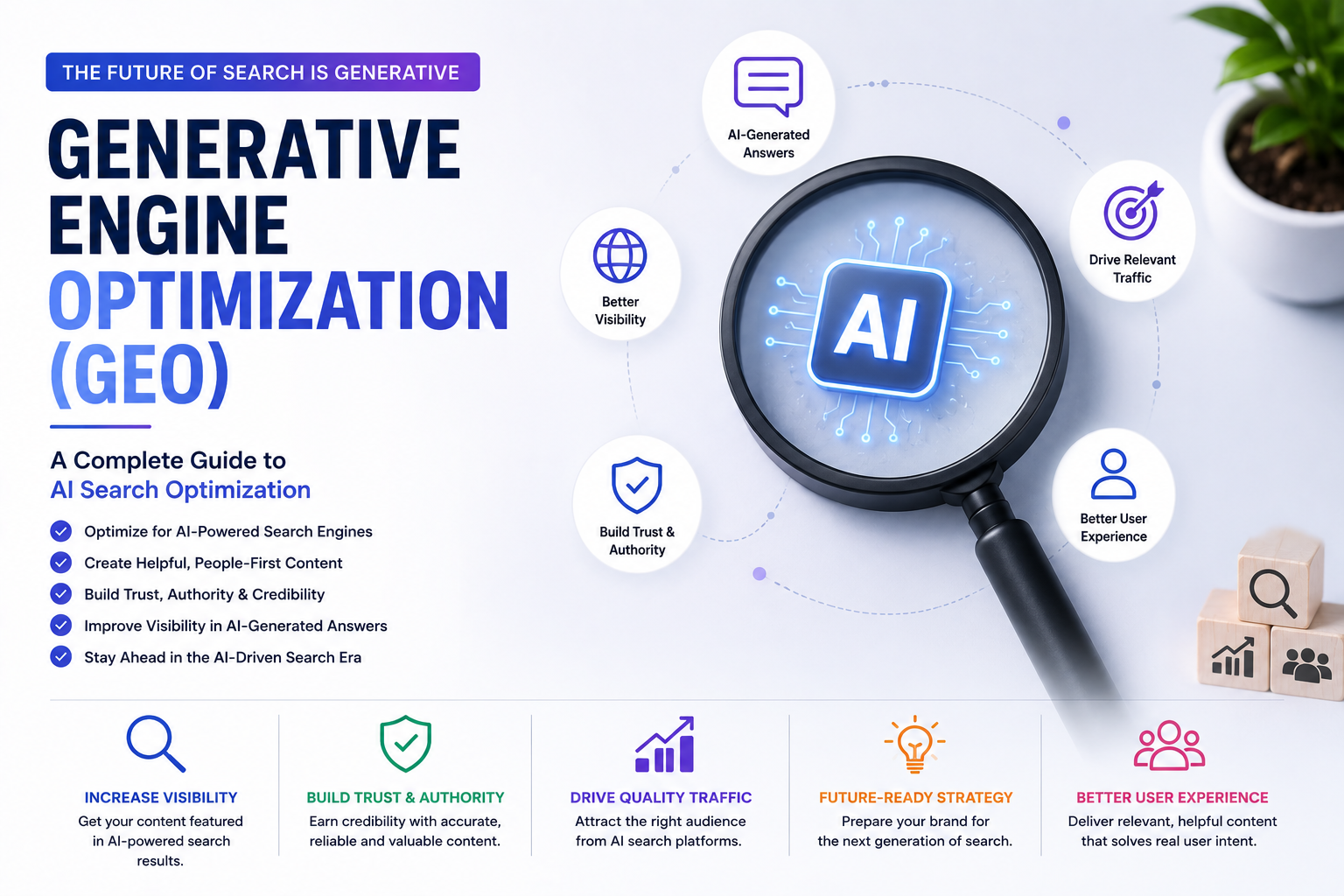
What Is Generative Engine Optimization (GEO)? Complete Guide for 2026
Artificial intelligence is changing the way people search for information online. Instead of relying only on traditional search engines, users are increasingly asking questions in AI-powered tools such as ChatGPT, Google AI Overviews, Microsoft Copilot, and Perplexity AI. These platforms often generate direct answers rather than simply listing web pages.
This shift has introduced a new concept known as Generative Engine Optimization (GEO). GEO focuses on helping your content become useful enough for AI systems to understand, trust, and reference when generating answers.
In this guide, you’ll learn what Generative Engine Optimization is, why it matters, how it differs from traditional SEO, and the best practices to prepare your website for AI-powered search.
What Is Generative Engine Optimization (GEO)?
Generative Engine Optimization (GEO) is the process of optimizing your website and content so that AI-powered search engines and generative AI assistants can easily understand, reference, and recommend your information when answering user queries.
Unlike traditional SEO, which aims to improve rankings in search engine results pages, GEO focuses on making content clear, trustworthy, well-structured, and useful for AI-generated responses.
The goal is to increase your chances of being cited or referenced when AI tools provide answers to users.
Why Is GEO Important?
Search is evolving rapidly. Millions of people now ask AI assistants for recommendations, explanations, and solutions before visiting websites.
As AI-generated answers become more common, websites that provide reliable and well-structured information have a greater opportunity to gain visibility
Some of the benefits of GEO include:
- Increased visibility in AI-generated answers
- Greater brand awareness
- More qualified website visitors
- Improved content discoverability
- Better long-term digital presence
- Enhanced user trust
Businesses that begin optimizing for AI search today will be better prepared for the future of online search.
GEO vs Traditional SEO
Although GEO and SEO share similar goals, they optimize for different search experiences.
Traditional SEO
- Focuses on Google search rankings
- Optimizes keywords and backlinks
- Targets organic search traffic
- Improves visibility in search results
Generative Engine Optimization
- Focuses on AI-generated answers
- Prioritizes clear and trustworthy information
- Helps AI understand content context
- Aims to become a trusted information source
Rather than replacing SEO, GEO works alongside it.
How AI Search Engines Work
AI-powered search systems use large language models to analyze information from multiple sources before generating responses.
These systems evaluate content based on factors such as:
- Relevance
- Accuracy
- Context
- Structure
- Authority
- Freshness
- User intent
Best Practices for Generative Engine Optimization
Create Helpful Content
Focus on solving real user problems instead of simply targeting keywords.
Demonstrate Experience and Expertise
AI systems tend to value content that reflects genuine knowledge and practical experience.
Whenever possible:
- Share original insights
- Include real examples
- Use reliable statistics
- Reference authoritative sources where appropriate
What is GEO?
A short definition followed by a more detailed explanation helps both readers and AI systems.
Build Topical Authority
Instead of publishing isolated articles, create related content that covers an entire subject.
- What Is SEO?
- Keyword Research Guide
- On-Page SEO Checklist
- Technical SEO Guide
- Local SEO
- Generative Engine Optimization
Improve Technical Performance
A technically sound website supports both traditional SEO and GEO.
- Fast loading speed
- Mobile-friendly design
- Secure HTTPS connection
- Structured data (Schema Markup)
- Clear navigation
- Crawlable pages
The Future of Generative Engine Optimization
As AI continues to influence how people search online, GEO is expected to become an increasingly important part of digital marketing.
Businesses that invest in high-quality, authoritative content and strong technical foundations will be better positioned to benefit from AI-driven search experiences.
Rather than focusing only on rankings, future optimization will emphasize delivering the best possible answers to users.
Final Thoughts
Generative Engine Optimization represents the next stage in the evolution of search. While traditional SEO helps users find your website through search engines, GEO helps AI systems understand and reference your content in generated responses.
The most effective approach is to combine strong SEO fundamentals with clear, accurate, and user-focused content. By doing so, your website can remain visible across both traditional search engines and AI-powered platforms as search continues to evolve.